For anyone waiting for the perfect intellectual leader,
you’re going to be waiting a long time.
In all likelihood, you’ll never stop waiting. Everyone has their “kill whitey” moments,
where they say something so stupid that you lose confidence in everything else
they already said. If it was as easy to
analyze every facet of people’s personal lives as it is today with our
ubiquitous camera phones and social networking websites, figures like Martin
Luther King Jr., Gandhi, Abraham Lincoln and even Bob Marley would likely not
have such immaculate reputations. In
fact, despite the lack of intrusive surveillance in those times historians have
still accumulated quite a bit of evidence that proves how flawed they really
were. It makes you wonder if they would
have had the same support from their followers had such technologies existed in
their time. How much worse would the
horizontal hostility have been between relatively like-minded groups? Would they have gotten anything accomplished
at all?
This is something I’ve been thinking about a lot lately. Not too long ago Deep Green Resistance, one of the few groups I consider worth listening to, lost a lot of what little support they had because of some controversial statements they made regarding transgendered people. Having recommended their books and videos to people many times before I found it pretty disturbing that I could suddenly be seen as a supporter of a hate group. It was especially surprising considering that I’d never heard or read anything about transgendered people in any of their projects. It didn’t exactly seem fitting with their other ideas. My initial hunch was that this was probably based on a misinterpretation of their radical feminist rhetoric, which I’m not a fan of either. As I started looking into it, trying to figure out what they could have said that caused such a backlash, it became increasingly apparent that their critics had no idea what they were talking about. Their main criticism seemed to be that the founders of the organization were against the idea of letting men who wanted to be women use women’s public bathrooms, locker rooms, dorms, etc. (sounds fair enough to me). They have addressed the concerns saying basically that they don’t hate anyone based on how they dress but it’s disrespectful to all those women who expect to be in a dick-free zone to give men that permission. Radical feminists also consider gender to be a hierarchy in our current society and therefore consider the idea of gender to not be a choice. I find this part of their philosophy a little confusing myself but I do sort of agree with what they’re trying to say.
This is something I’ve been thinking about a lot lately. Not too long ago Deep Green Resistance, one of the few groups I consider worth listening to, lost a lot of what little support they had because of some controversial statements they made regarding transgendered people. Having recommended their books and videos to people many times before I found it pretty disturbing that I could suddenly be seen as a supporter of a hate group. It was especially surprising considering that I’d never heard or read anything about transgendered people in any of their projects. It didn’t exactly seem fitting with their other ideas. My initial hunch was that this was probably based on a misinterpretation of their radical feminist rhetoric, which I’m not a fan of either. As I started looking into it, trying to figure out what they could have said that caused such a backlash, it became increasingly apparent that their critics had no idea what they were talking about. Their main criticism seemed to be that the founders of the organization were against the idea of letting men who wanted to be women use women’s public bathrooms, locker rooms, dorms, etc. (sounds fair enough to me). They have addressed the concerns saying basically that they don’t hate anyone based on how they dress but it’s disrespectful to all those women who expect to be in a dick-free zone to give men that permission. Radical feminists also consider gender to be a hierarchy in our current society and therefore consider the idea of gender to not be a choice. I find this part of their philosophy a little confusing myself but I do sort of agree with what they’re trying to say.
Admittedly, when I first started looking into this, I didn’t
even know what the distinction was between transgendered, transsexual,
transvestite and just gay. This is
something I never really thought about at all and so I found it pretty annoying
that I could be accused of being
anti-something-I-don’t-even-have-an-opinion-on.
I didn’t start supporting DGR for their trans policy or their hardcore
feminism. I supported them because their
ideas on environmentalism and social justice were closer to my own than any
other group I’ve come across. In fact, I
generally share their work with the caveat “I don’t label myself a radical
feminist.” It’s not that I necessarily
disagree with radical feminists. It’s
that I find their explanations to be overly confusing for topics that are
already so complicated and controversial.
For example, if patriarchy is a word used to describe male-dominance
then why is matriarchy the word used to describe egalitarian societies? And if you acknowledge that men are being
victimized as well since it’s more a class hierarchy than a sex hierarchy is
patriarchy really the most accurate word to use in the first place? How is it “blaming the victim” to point out
that women should take precautions (such as not advertising themselves as
sexual objects, not misleading men to get them to buy them stuff, not drinking
themselves unconscious and expecting someone else to take care of them, etc.)
and treat themselves with self-respect?
Why is it wrong to point out the problems with what women of western
culture consider normal but not the destructive behaviors men have become
accustomed to? How are women innocent
and men guilty if they were both trained how to act by their culture?
I could go on and on, and to be fair feminists would have
answers to all these questions but they would only resonate with other
feminists who already speak the same language.
This is why I don’t agree when people call feminists “anti-man”, or just
flat out crazy, but I also don’t blame them for coming to that conclusion. It really is more a case of bad propaganda
than anything.
So having said that, what gets someone labeled as
transphobic? And what even qualifies someone
as transgendered as opposed to transvestite, transsexual or just gay? I’m certainly no expert on the subject as
I’ve said already (and it wasn’t too long ago that I was using “gay” and “fag”
as derogatory terms for anyone or thing that sucked in some way, even though I
didn’t really have anything against homosexuals) but it is a pretty nebulous
term. It’s generally used to refer to
those who identify with the opposite
sex more than their own. So it’s not
really about the way they dress or what surgeries they’ve had or who they’re
attracted to. It basically just comes
down to whether they’d like to be treated as a member of their biological sex
or the opposite. This of course brings
up questions about accepted gender roles and what makes a woman a woman as
opposed to a man, etc. I mean, can a heterosexual
tomboy or male hair stylist be considered transgendered if they choose to
be? This may sound like an insignificant
question but it has pretty profound ramifications when you start to consider
the rights that some transgendered people are demanding. It’s one thing to ask to be referred to as a
Mrs. Instead of a Mr. but when you consider it a hate crime to be denied access
to bathrooms that are designated for the opposite sex you’re really pushing it.
The other day on Democracy Now! Amy Goodman interviewed a transgendered actress (meaning a man that lives as a woman) and they discussed some pretty disturbing statistics about the struggles transpeople deal with. Between the hate and the confusion surrounding their lifestyle they’re likely the most persecuted demographic in our society, facing much higher rates of suicide, murder, homelessness and incarceration (Nearly half of all black transwomen spend time in prison). So of course the question of whether transwomen should be sent to women’s prisons instead of men’s came up, and I was pretty surprised how acceptable the idea is. To me it seems completely ridiculous to allow them to choose which one they go to. How hard would it be for any other male prisoner to present themselves as transgendered and get themselves locked up with a bunch of vulnerable, sexually deprived women considering the obscurity of the word itself? Obviously men’s prisons aren’t a great place to be for a transwoman, or anybody else for that matter, so I don’t know what the answer is for these people but opening up the door for further sexual assaults on women isn’t it. Yet this seems to be exactly what the majority of radicals and progressives are proposing, and I really don’t get it.
It’s especially strange for the anti-civ crowd to be so shy about
criticizing transpeople who use plastic surgery, artificial hormone therapies
and who basically embrace everything they claim to hate about the modern
materialistic shopaholic female. It
makes absolutely no sense. These are
people who rant nonstop about how disgusting the medical industry is and how
wasteful and shallow rich white girls are but if the same behavior is demonstrated
by a man it’s suddenly sacrosanct? I
don’t mean to stereotype transpeople or try to create the impression that they
all fit into this category. I’m just
pointing out that any time someone is this logically inconsistent they’re
either confused or insincere. They’re
being political. I mean, how do you
write books about how disgusting the pharmaceutical industry is, pointing out
the effects of pollution from the manufacture and disposal of their products as
well as the political clout their profits have given them and the negative social
and psychological effects of their advertising then have no problem with
someone subjecting themselves to unnecessary surgeries and making themselves
dependent on artificial hormones? This
is the type of behavior that under any other circumstance they’d consider a
self-induced disease or a further sign of society’s psychological
degradation. It represents everything
that people like John Zerzan (one of DGR’s most outspoken critics and someone
who agrees with 99% of what they say) would usually decry.
You find this with virtually every group out there. In fact, it’s as rare to find groups who have
almost nothing good to say as it is to find groups have almost nothing bad to
say, most being somewhere in between, none of them being perfect. In Zerzan’s case, his best solutions seem to
be breaking windows and reading poetry as far as I can tell. I actually listen to his radio show sometimes
since there are so few people out there discussing these subjects and one of
his books is on my bookshelf even, and with him solutions almost never come
up. These days he tends to rant about
his hatred for Derrick Jensen and Chris Hedges, which I found confusing for a
while until he complained how they criticized the way black bloc anarchists
conducted themselves at Occupy protests, basically trying to break windows and
light shit on fire while blending in with non-violent protesters, practically
using them as shields (Zerzan’s radio show is called Anarchy Radio). Like I said, it’s clearly politics. Their criticism wasn’t even against the
“violent” tactics per se, but about sabotaging peaceful protests. Again, seems fair enough in my opinion.
As for DGR, I’ve already criticized radical feminism a
little bit. They’re also guilty of
romanticizing pre-civilized societies, saying things like rape didn’t exist in
the Americas until the European colonizers showed up (literally) and that Native
Americans never hunted any species to extinction. Derrick Jensen actually makes a pretty big
deal about Pleistocene Overkill in his book Endgame, and he could be right
about it but I’m definitely not convinced.
Honestly though, I don’t even see any reason to worry about it. Of course Native Americans made mistakes,
especially during their first years on the continent. That doesn’t invalidate anarcho-primitivism,
bioregionalism, permaculture or anything else the anti-civ crowd advocates. What should matter is how they learned from those
mistakes and later developed sustainable cultures (as well as how some didn’t
learn and made a lot of the same mistakes Europeans did). At least their romanticism isn’t as annoying
as mainstream apologism, such as the idea that the desertification of north
Africa and the Fertile Crescent is solely the result of the Earth’s 20,000 year
cycle as it wobbles in its orbit and has nothing to do with human
activity. The History Channel really
pisses me off.
This is sort of what I’m trying to get at with this
post. We don’t need to select an entire
package of solutions from any one group.
We can select parts from many flawed ones if we want to. And Deep Green Resistance remains one of the
few groups I’ve found saying the things that I think need to be heard. I’m not going to reject everything they say
simply because they aren’t perfect.
Similarly, New Age spiritual pseudoscience annoys the shit out of me but
I still recommend listening to Charles Eisenstein for his insights into
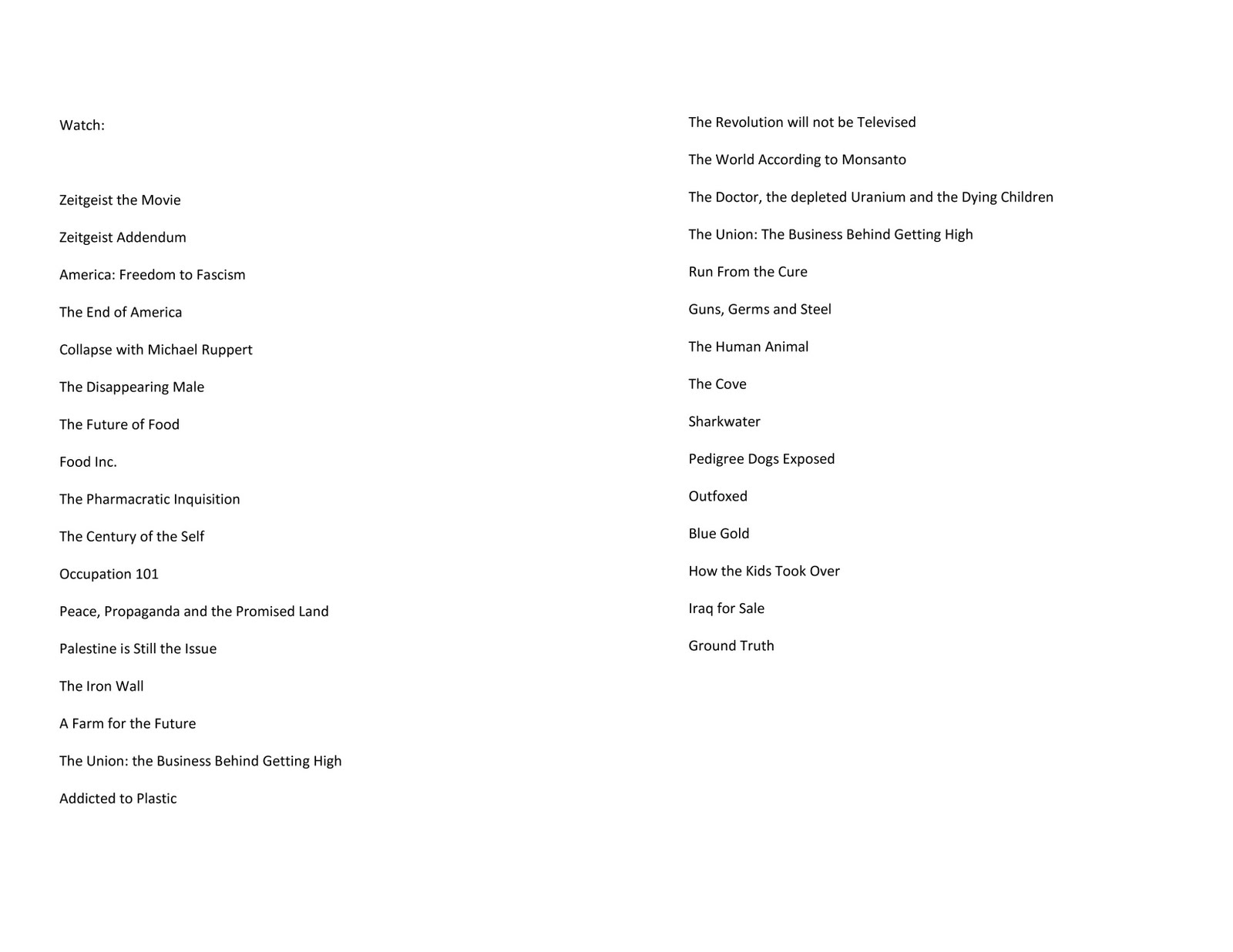
economics. I consider the Zeitgeist
movement’s solutions to be so delusional as to be dangerous but I find their
criticisms of the current system to be some of the clearest and most
persuasive. I consider the Transition
Town movement to be too little too late but I appreciate the success they’ve
had in making radical ideas more acceptable to the mainstream. Feminists and tree-hugger hippie types
explain their ideas in ways that don’t resonate with those who most need to
hear what they have to say but I recognize the importance in challenging the
type of language the mainstream accepts as normal. And the list goes on.
Nobody will ever have the one perfect opinion about
everything. Not only that but even the
attempt to develop such a thing is itself destructive. There is no one philosophy that translates
the same to every region of the globe.
And even if there was, we should still allow for variations. Uniformity is inimical to resilience and
stability. As is the never ending
crusade for knowledge that scientists call progress. If knowing everything about everything is the
only hope your culture has of not destroying itself then you’re fucked for one
thing, and for another you’ll use that to justify atrocities (what are
generally referred to as “experiments”).
The alternative is what some have taken to calling an “ignorance based
worldview”, an acknowledgement of our cognitive limitations and a more
realistic approach to problem solving that doesn’t inevitably lead to further
complexity.
Of course, this is a pretty nebulous concept as well. The desired level of “ignorance” (or the
maximum amount of information that can be learned and remembered without the
aid of unsustainable and immoral practices) is certainly open to debate. The way I look at it, much of our information
and our “accomplishments” are inherently destructive to hold on to. Think not only of the maintenance required
for our industrial infrastructure but even our collection of books, artwork and
historical artifacts we continually reprint and try to keep from decaying. Think of what it takes to keep our supposedly
accurate history lessons going, all the materials, training and coordination required. It actually necessitates the repeating of the
mistakes that the history is supposed to warn us against. Isn’t that ostensibly why we make such a big
deal about this stuff? If the importance
of history is to learn from the mistakes of the past such as slavery,
imperialism and environmental negligence what’s the point in using an education
system that contributes to those very problems?
Producing so much paper, building enormous universities that are large
enough to shelter thousands from the elements (and that aren’t actually used
for that purpose) and producing the excess needed for specialists to dedicate
their lives to study and teaching is a brief experiment in human learning and
it won’t last much longer.
There’s a reason no cultures did these things before the age
of cheap fossil energy. They
couldn’t. It takes too much to support
these things. It requires more than any
local landbase can provide. This is why
they used songs, stories and other mnemonics to remember what we store in
volumes of textbooks and hard drives.
And this is why we should start considering a resurrection of this type
of education. It would be a good idea
for us to pick out our most important lessons, leave out the trivia and start
translating these ideas into easy to remember myths and jingles, something
closer to fairy tale type stories than the dogmas that people have been
encouraged to take literally. Most
religions were sort of scientifically designed this way in their inceptions,
meant to perpetuate certain desirable behaviors while warning against
others. Teaching the origins of the
universe was never really the point, at least not as much as getting people to
stop asking such a pointless question.
I’m not trying to say that the ideas are scientifically valid. As a tool for social coordination however, it
does exactly what was intended (which wasn’t necessarily to promote peace and
happiness, obviously). Anyway, how to
keep the lessons we’ve learned from our scientific endeavors without a massive
industrial infrastructure is something we need to start considering.
Think also of our own personal accomplishments, namely the
careers and possessions that are the result of all our hard work. Think of our identities, everything we’ve
committed ourselves to and vehemently advocated, everything we think we
deserve. Letting go of such things can
be rough. What will it take to admit
that so much of what we’ve done and taken pride in was not only a waste of time
but actually immoral? And to get this
post back on subject, what will it take to admit how wrong we are? All of us?
About everything? And that we
always will be? Well, the word “miracle”
comes to mind. Being a little more
pragmatic though I guess I’d say something like “a way out.”
In my last couple posts I went into detail about the
importance of losing our dependence on the industries that are currently
destroying the world, and therefore the need for what you could call “primitive
infrastructure,” basically land restored and designed to produce everything
humans need as well as settlement patterns that can give all people local and
free access to those necessities (which inevitably requires mass relocation
from cities to farmland). While this may
still fit into the miracle category, it is the only possibility to sustain
anywhere near our current population size and likely the only way to reverse
climate change even with a smaller population so therefore I see no reason to advocate
anything more “realistic.” I’m not going
to reiterate my entire argument here for a third time but my previous essays
are there for anyone interested. I also
highly recommend listening to people like Geoff Lawton, Allan Savory and John
D. Liu for more detailed explanations.
If we’re serious about solving our problems then we really need to stop
with the unrealistic prospect of attaining enlightenment and actually get
moving with this stuff.